

Guinea pigs purr to communicate comfort, bonding, mild stress, or social warnings.
Curious about why do guinea pigs purr at each other? As a small-animal caretaker and behavior observer, I have seen how this simple sound carries rich meaning.
This guide explains what purrs mean, when they are positive, when they signal tension, and how you can respond. Read on to learn why do guinea pigs purr at each other and how to support calm, happy bonds.
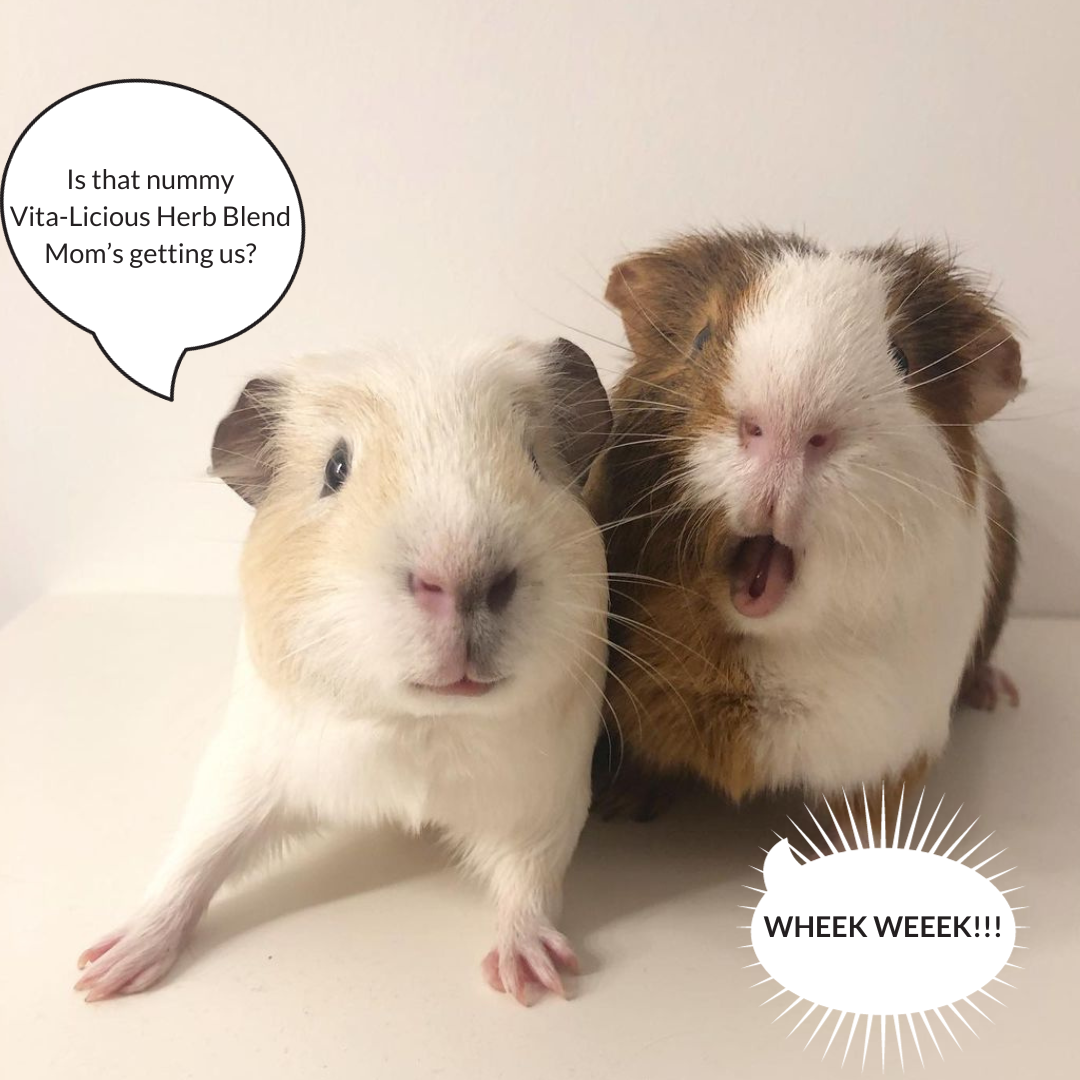
Understanding why do guinea pigs purr at each other
Purring is a normal part of cavy communication. It is not only a sign of joy. It can also mark status, courtship, or a polite warning.
Context makes the message clear. Watch their bodies and the room vibe. Ask when it happens and what came right before it. This is how you decode why do guinea pigs purr at each other in daily life.
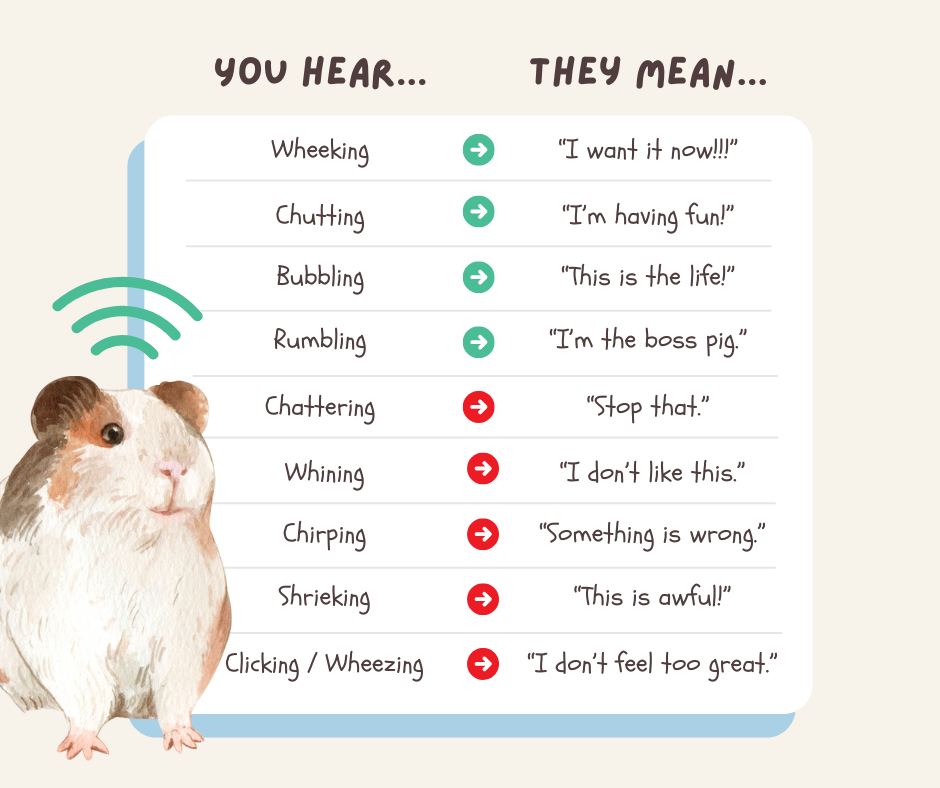
The science of purring in guinea pigs
The sound comes from the larynx as air moves over soft tissue. The chest and body may vibrate. You may feel a hum if you place a gentle hand on the back.
Behavior studies show purrs vary in pitch and length. The low, steady purr often links to comfort. The tense, short purr often links to alert or mild annoyance. This helps explain why do guinea pigs purr at each other in different tones.
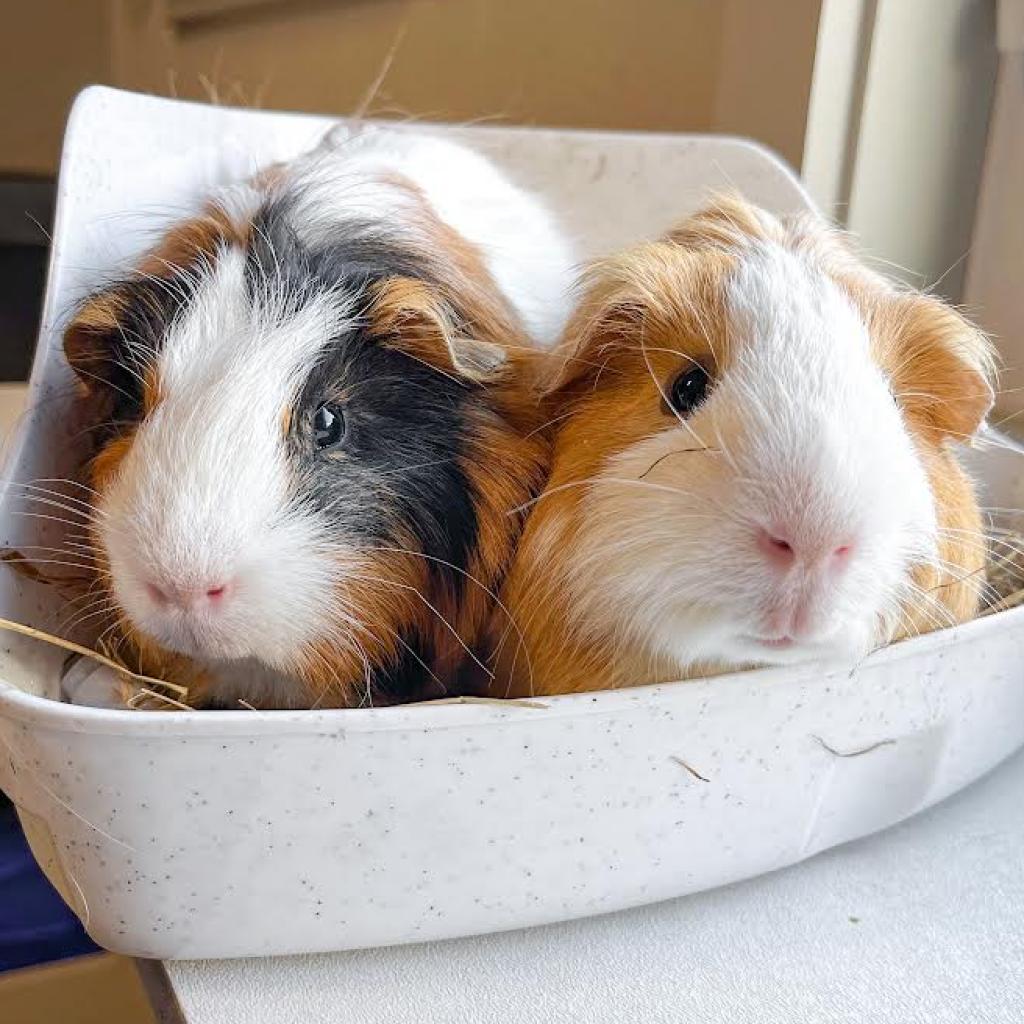
Social communication: when and why do guinea pigs purr at each other?
Guinea pigs are herd animals. They use voice to keep peace and share needs. Here is when you will hear them purr with each other:
- Relaxed bonding. Side-by-side rest, light grooming, or shared hay time.
- Courtship or dominance. A slow strut with a low purr to show interest or rank.
- Greeting or check-in. A short purr when cage mates rejoin after brief time apart.
- Space warning. A quick, tight purr to say “not now” during handling or crowding.
- Environmental scan. A brief purr when a new sound or smell appears.
In my rescue work, pairs that eat hay in sync often give soft, low purrs. New pairs purr more often at first. This is why do guinea pigs purr at each other so much during intros. They are setting rules and building trust.
Reading the whole body: happy purrs vs warning purrs
Purrs do not stand alone. Body language finishes the story. Use these cues to read the room.
Happy or content purr:
- Low, steady hum with loose muscles.
- Eyes half closed, body stretched, feet tucked.
- Slow munching, soft grooming, or quiet rest.
Warning or annoyed purr:
- Short, higher, or rough sound with tense body.
- Still stance, head raised, ears slightly back.
- May pair with a sway, butt wag, or side-step.
Watch for other signs such as teeth chattering or lunging. Those mean the mood has turned. This helps you judge why do guinea pigs purr at each other and act fast if needed.
Environmental triggers and husbandry tips to encourage positive purring
You can shape the sounds you hear. Set up a space that makes calm purrs more likely.
- Provide space and zones. Aim for a roomy cage with at least two hideys and two hay piles.
- Keep a steady routine. Feed and clean on a schedule to reduce alert purrs.
- Pair wisely. Match temperaments and introduce on neutral ground.
- Offer forage. Scatter hay and safe herbs to promote relaxed, shared munching.
- Control noise. Limit sudden clatter and loud TV.
I learned that a second hay rack can cut short, tense purrs by avoiding crowding. This simple change answers why do guinea pigs purr at each other near food: they negotiate access.

Common mistakes owners make when interpreting purrs
It is easy to misread the sound. Avoid these pitfalls.
- Assuming every purr is joy. Some purrs warn others to give space.
- Ignoring context. The same sound can mean different things in a new setting.
- Overhandling. A tight purr during petting may mean “please stop.”
- Missing early stress signs. Short purrs may come before teeth chattering.
- Mixing up rumble-strut and contentment. The strut plus low purr is often rank-setting.
When owners ask why do guinea pigs purr at each other, this list is my starting point. Get the context right first.

Step-by-step: how to respond when you hear purring
Follow a simple process when you hear a purr.
- Pause and observe. Note body posture, distance, and recent events.
- Check resources. Add a hay pile, water, or a second hide if crowding caused it.
- Reduce stress. Lower noise, dim lights, or give a safe break.
- Adjust handling. If the purr is tight, set the guinea pig down and let it reset.
- Track patterns. Log time, trigger, and type of purr to learn their language.
Over a week, you will see why do guinea pigs purr at each other at specific times. Then, you can plan ahead.
Health considerations: when purring signals stress or pain
Most purrs are normal. But some sounds may point to stress or discomfort. Look for weight loss, low energy, ruffled coat, or changes in stool.
If a guinea pig purrs while frozen, breathes fast, or hides more, call a vet. Pair the sound with health checks and a scale. This helps rule out pain. Clear tracking helps explain to your vet why do guinea pigs purr at each other more than before.

Frequently Asked Questions of why do guinea pigs purr at each other
Do guinea pigs purr like cats?
They do purr, but the meaning is broader. Guinea pig purrs can signal comfort, courtship, or mild stress.
Why do guinea pigs purr at each other during feeding?
They may set gentle rules or ask for space. Add a second hay pile to ease crowding.
Is a low rumble with swaying a happy sound?
Often it is a dominance or courtship display. It is normal if both pigs stay calm and no one chases hard.
Why does my guinea pig purr when I pet it?
A loose, steady purr means contentment. A short, tight purr means it may want a break.
Can a purr mean fear?
Yes, a brief, tense purr can be a warning. Pair it with the body stance to be sure.
How do I stop tense purring between cage mates?
Add space, hides, and duplicate key items. Give short, neutral-ground play sessions to reset their bond.
Why do guinea pigs purr at each other more after a cage clean?
New smells can reset territory. Keep some used bedding and re-add it to keep familiar scents.
Conclusion
Purring is a rich, flexible signal in guinea pigs. It can mean comfort, a polite warning, or a social display. When you read posture, timing, and setting, you can decode why do guinea pigs purr at each other with confidence.
Try the steps in this guide this week. Log what you hear and the body cues you see. If this helped, subscribe for more small-pet behavior tips or share your own purr stories in the comments.