

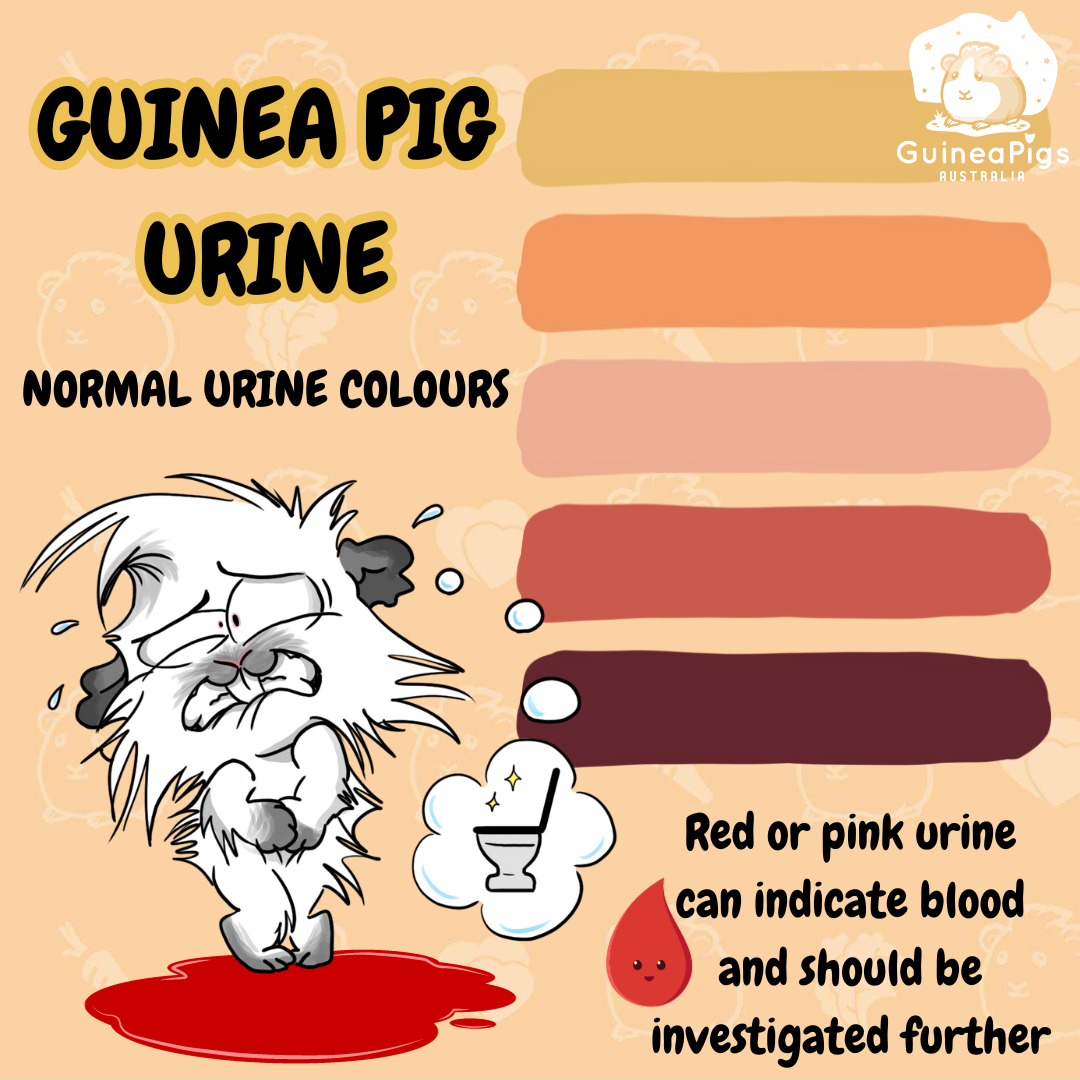
Healthy guinea pig pee is usually pale yellow to orange and can look a bit cloudy.
Curious about what color is guinea pig pee and when to worry? You are in the right place. I have cared for many guinea pigs in clinics and at home.
I will explain normal urine colors, warning signs, causes, and simple checks you can do today. Stay with me to learn what color is guinea pig pee, how it changes, and how to keep your pig healthy.
Normal Guinea Pig Pee Colors and Why They Change
Most healthy guinea pigs pass urine that is pale yellow to deep amber. It often dries darker on bedding. A light orange tint is also common. This can happen when natural pigments in the urine react with air.
Cloudy urine can be normal too. Guinea pigs excrete excess calcium as crystals. This can make urine look milky or chalky after it dries. A thin white crust on a clean surface is not always a problem. If it is thick and gritty, that is different and needs attention.
You may see color shifts after certain foods. Carrots and bell peppers may deepen the tone. Beet tops or strong plant pigments can add an orange or rust tint. These shifts should be short and mild. If you wonder what color is guinea pig pee after a diet change, watch it for a day or two.
It helps to know that urine will darken as it sits. Oxidation can turn yellow to orange or brown on the pad. Fresh color is the best clue. If you want a clear look, check the puddle as soon as your pig goes.

Source: kavee.com
Concerning Colors and What They May Mean
Red or pink urine needs a careful look. Plant pigments can stain, but blood is also possible. True blood often looks bright red, red strings, or clots. It may come with pain, squeaks, or straining. That can mean a urinary tract infection or bladder stones.
Very dark brown or tea colored urine can be dehydration. It can also be oxidized blood. If the color is new, strong, and stays that way, call your vet.
Neon yellow with a sharp smell can point to very concentrated urine. Clear, very watery urine all the time can suggest overhydration or other issues. If you are asking what color is guinea pig pee when they are ill, it is often either too dark, red tinged, or paired with other signs.
Greenish tints are rare and can be lighting or bedding stain. Blue or odd colors can follow certain meds, but this is uncommon. When in doubt, collect a sample and get a urinalysis. That is the fastest way to stop guessing.
Texture, Smell, and Frequency: Reading the Full Picture
Color is only one clue. Texture matters. A thin, smooth puddle is normal. Thick, pasty, or gritty sludge is not. Grit points to excess calcium in the bladder.
Smell helps too. A mild, slightly musky smell is normal. A sharp ammonia smell means the cage needs more cleaning. A foul, fishy, or sour odor can suggest a urinary infection.
Frequency should be steady. Guinea pigs pee many times a day. If you see less urine, straining, squeaking, or wet fur around the rear, take note. When people ask what color is guinea pig pee, I also ask how it smells and how often the pig goes. The full picture tells the truth.

Common Causes of Color Changes
Diet is a big driver. High calcium foods can lead to cloudy urine and gritty residue. Limit alfalfa hay for adults. Offer grass hay as the base. Rotate leafy greens with moderate calcium.
Dehydration concentrates urine. This makes it darker and stronger in smell. Offer fresh water in a bottle and a bowl. Some pigs drink more from a bowl. Keep both clean.
Stress can shift urine for a short time. Moves, new cage mates, or loud noise can change eating and drinking. That can change the look of urine for a day or two.
Medications and supplements may tint urine. Vitamin C is safe and needed, but high doses can sometimes change acidity. Plant pigments from food can pass through fast. If you wonder what color is guinea pig pee while on meds, ask your vet what to expect.
Underlying disease is the big concern. UTIs, bladder stones, and kidney issues will often change color and cause pain. Do not wait if you see blood, thick sludge, or clear signs of discomfort.
How to Check, Collect, and Talk to Your Vet?
Simple checks help you act early.
Try these steps:
- Use a white paper towel or puppy pad during floor time to see color fast.
- Watch a fresh puddle under good light. Note color, clarity, and smell.
- Rub a finger on dried spots. Fine powder is common. Grit like sand is not.
- Keep a small log. Note food changes and urine changes side by side.
To collect a clean sample:
- Place your pig in a clean carrier with a fresh plastic liner and no bedding.
- Wait a few minutes after offering water or leafy greens.
- Draw the urine up with a clean syringe or dropper and put it in a sterile cup.
- Get it to your vet within an hour if you can. Keep it cool but not frozen.
Call your vet now if you see:
- Red strings, clots, or steady pink to red urine
- Squeaking, hunching, or straining during urination
- Very dark urine with low output
- Strong foul odor with lethargy or loss of appetite
These steps answer what color is guinea pig pee and what to do when it is not right. The goal is quick action and less stress for your pet.
Prevention Tips and Daily Care Checklist
You can prevent many urine problems with simple habits.
Daily habits:
- Offer unlimited grass hay and fresh water in both a bottle and a bowl.
- Feed a measured amount of low calcium pellets.
- Rotate greens like romaine, cilantro, and bell pepper. Limit spinach and parsley.
- Clean wet spots in the cage each day. Do a full clean every week.
- Weigh your pig weekly. Sudden loss can warn of hidden issues.
Extra tips:
- Use unscented, absorbent bedding so color is easy to see.
- Keep a small diary of food, water, and urine notes.
- Schedule wellness checks. Ask the vet to review diet and calcium intake.
These steps make it easy to track what color is guinea pig pee over time. Trends tell you more than one odd day.

Frequently Asked Questions of what color is guinea pig pee
What color is guinea pig pee when they are healthy?
Healthy urine is pale yellow to amber and may dry darker. A mild cloudy look from calcium is common.
Can food change what color is guinea pig pee?
Yes, plant pigments can tint urine orange or rust for a short time. The change should fade within a day or two.
When should I worry about red urine?
Bright red, pink, or urine with clots can be blood. If you see this, call your vet and watch for pain or straining.
Why is my guinea pig’s urine cloudy or chalky?
Cloudy urine can be normal calcium excretion. Thick, gritty sludge is not normal and needs a vet check and diet review.
Does smell matter when checking what color is guinea pig pee?
Yes. A strong ammonia smell points to dirty bedding or concentrated urine. A foul odor with strange color can mean infection.
How often do guinea pigs pee in a day?
They pee many times a day due to steady water and veggie intake. Watch for steady output and comfort during urination.
Can dehydration affect what color is guinea pig pee?
Yes. Dehydration makes urine darker and stronger in smell. Offer fresh water and wet leafy greens to help.
Conclusion
Now you know what color is guinea pig pee, what is normal, and what is not. Use color, texture, smell, and behavior to guide your next steps. Small daily checks and a clean setup go a long way.
Keep notes, adjust diet, and reach out to your vet when something looks off. Your quick action can prevent pain and bigger problems. Want more care tips? Subscribe, share your questions, or leave a comment with your pig’s story.