

Avoid avocado, onion, garlic, potato greens, rhubarb leaves, chocolate, dairy, and seeds.
If you care for cavies, you’ve asked what foods can’t guinea pigs eat. I have spent years helping owners fine-tune safe menus and fix diet mistakes.
Here, I explain what foods can’t guinea pigs eat, why they are risky, and what to serve instead. You will get clear rules, simple lists, and real tips that work.
Source: oxbowanimalhealth.com
Why some foods are unsafe for guinea pigs?
Guinea pigs are strict herbivores with a delicate gut. They cannot vomit, so even a small mistake can escalate fast. Knowing what foods can’t guinea pigs eat helps you protect their health every day.
Their digestion depends on steady fiber from hay. Sudden sugars or starch can upset gut bacteria. High calcium foods can lead to bladder stones. Oxalates can bind minerals and irritate the urinary tract. Strong plant toxins can harm nerves, blood cells, or the liver.
I have seen bloat from a single big serving of cabbage. I have also seen urinary sludge after weeks of high-calcium greens. These were good owners who just lacked clear rules. This article gives those rules.
Toxic and dangerous foods to never feed
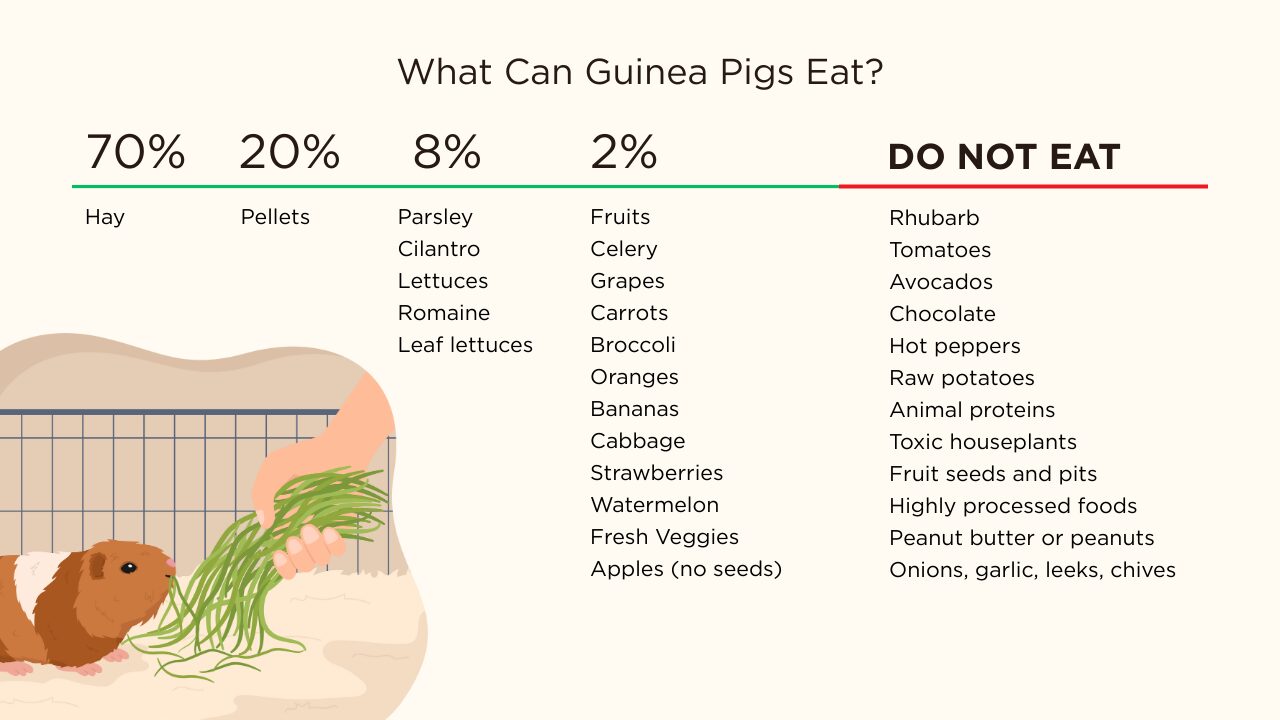
Start with a hard line. These foods are never safe. If you wonder what foods can’t guinea pigs eat, this list is your core do-not-feed guide.
- Avocado. Contains persin, which can affect the heart and lungs.
- Onion, garlic, leeks, chives. Can damage red blood cells.
- Potato leaves, sprouts, and green skin. Contain solanine. Raw potato is also a poor, starchy choice.
- Tomato leaves and stems. Tomatine is harmful. Small amounts of ripe tomato fruit can be a treat, seeds removed.
- Rhubarb leaves. Very high in oxalates and can be toxic.
- Chocolate, coffee, tea, energy drinks. Caffeine and theobromine are dangerous.
- Alcohol and any fermented food. Never safe.
- Seeds and pits of apples, pears, cherries, peaches, apricots. Cyanide risk and choking hazard.
- Mushrooms, especially wild or unknown. Risk of toxins and gut upset.
- Houseplants like pothos, philodendron, dieffenbachia, and aloe. Keep all plants out of reach.
- Moldy or spoiled food and hay. Can cause severe illness.
I once treated a pig who nibbled a pothos leaf. He drooled and became weak within an hour. Emergency care helped, but the scare was real. Asking what foods can’t guinea pigs eat before offering a bite can prevent such moments.

Foods that bloat or upset the gut
Some foods are not toxic, but they cause gas or diarrhea. When you map out what foods can’t guinea pigs eat or should limit, put these in the caution zone.
- Cruciferous vegetables in large amounts. Broccoli, cauliflower, cabbage, and Brussels sprouts can cause painful gas.
- Beans and peas. High in fermentable carbs. Small tastes only, if at all.
- Iceberg lettuce. Very low nutrition and very watery. Can lead to loose stools.
- Large fruit servings. Too much sugar causes gut imbalance.
- Dried corn, hard kernels, or corn-based snacks. Choking risk and high starch.
- Bread, pasta, rice, and baked goods. Not part of a natural diet.
If your guinea pig’s belly looks rounder than normal or he stops eating, act fast. Bloat is an emergency. Calling your exotics vet is the right move.

High-calcium and high-oxalate greens to limit
Calcium and oxalates matter. Many owners who ask what foods can’t guinea pigs eat are shocked to learn that some “healthy” greens can be a problem in large amounts.
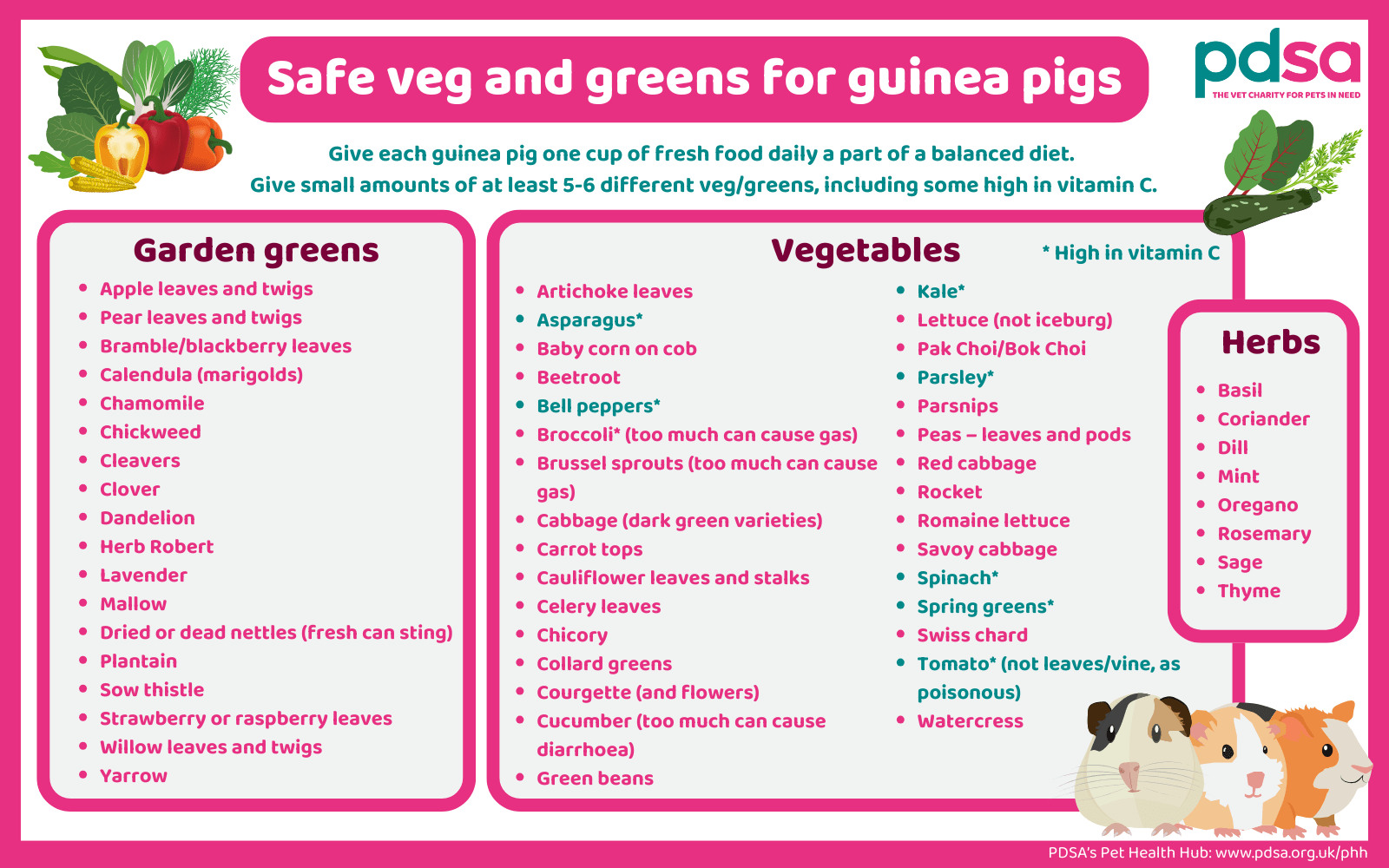
Limit these to small, rotating servings:
- Spinach and beet greens. Very high oxalates.
- Swiss chard. High oxalates and can irritate the gut.
- Kale, parsley, collard greens, and dandelion greens. High calcium.
These greens are not banned. Just use them sparingly and mix with lower-calcium options. Too much over time can lead to stones or sludge. I once helped a family switch from daily parsley to bell pepper and romaine. Their pig’s urine went from gritty to clear in a few weeks.
Processed, sugary, salty, or fatty foods
The simple test is this: would it grow in a meadow? If not, it is likely a no. This section highlights what foods can’t guinea pigs eat from the pantry.
- Cereal, chips, crackers, popcorn, and cookies. Too salty, sweet, or starchy.
- Yogurt drops, seed sticks, and trail mixes. Misleading “treats” that strain the gut.
- Nuts and nut butters. High fat, choking risk.
- Oils, dressings, and seasonings. Never needed.
- Meat, eggs, and dairy. Guinea pigs are herbivores and lactose intolerant.
These foods tempt us because they look fun. But for guinea pigs, they are like gravel in a fine watch. Keep treats simple and fresh.

Hidden hazards in and around the home
Diet safety also means checking the source. Many people search what foods can’t guinea pigs eat after an outdoor nibble. Prevent access to risky places and things.
- Lawn clippings and treated grass. Chemicals, mold, and fast fermentation are risks.
- Pesticides and fertilizers on produce. Wash all veggies well.
- Foraged plants you cannot ID. Look-alikes can be toxic.
- Wood from cedar or fresh pine used as chew toys. Aromatic oils can irritate airways.
- Plastic or fabric chewed off toys. Not food, but can block the gut.
Keep your pigs in a safe zone during floor time. I fence off plant corners and run a quick sweep before play. Small steps stop big problems.
Safe staples and smart swaps
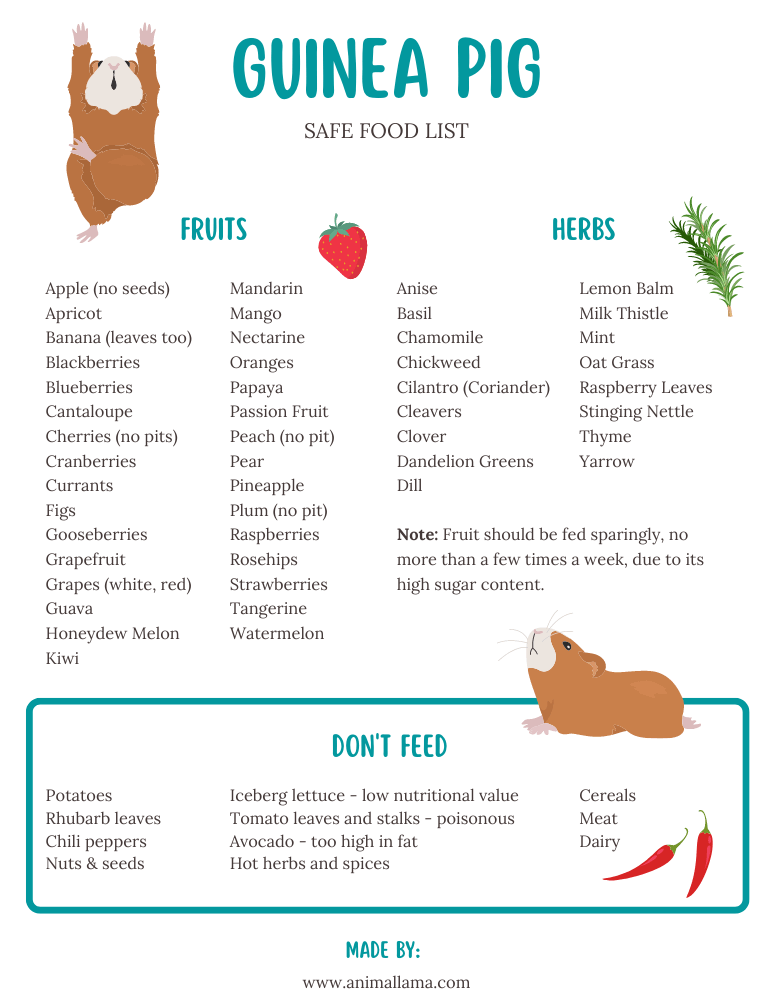
Owners need a plan, not just warnings. When you learn what foods can’t guinea pigs eat, you also need a list of what they can enjoy every day.
Daily staples:
- Unlimited grass hay. Timothy, orchard, or meadow. This powers digestion and wears down teeth.
- Plain, Timothy-based pellets. About 1/8 cup per adult pig per day. Choose pellets with stabilized vitamin C and no seeds.
- Fresh water. Refill and clean bottles each day.
Vitamin C heroes:
- Bell peppers (all colors). Top choice for daily vitamin C.
- Leafy greens like romaine, green leaf, red leaf, endive, escarole, and cilantro.
- Occasional extras like a thin slice of carrot, cucumber, or zucchini.
Smart swaps:
- Want to give “lettuce”? Choose romaine over iceberg.
- Need a “treat”? Offer a sliver of bell pepper over fruit candy.
- Craving variety? Rotate low-calcium greens through the week.
Serve raw, washed, and at room temperature. Cut food into bite-size pieces. Remove all seeds and pits. Introduce one new item at a time. This is how I guide new adopters, and it works.
Source: animallama.com
Feeding mistakes to avoid and signs of trouble
Avoiding mistakes is easier when you have a checklist. Keep asking what foods can’t guinea pigs eat, and look for early signs of distress.
Common mistakes:
- Offering large new servings without a slow intro.
- Relying on fruit instead of leafy greens for vitamin C.
- Overusing high-calcium greens in adults.
- Using multivitamin drops in water. They degrade fast and can change water taste.
- Skipping hay or using seed-filled pellet mixes.
Warning signs:
- Not eating or pooping for 6 to 8 hours.
- A swollen or tight belly, grinding teeth, or hunching.
- Diarrhea, drooling, or odd weakness after a new food.
- Gritty urine or blood in urine.
What to do:
- Remove the suspect food and offer hay only.
- Provide fresh water and offer a small amount of favorite, safe greens.
- Call an exotics vet. Guinea pigs decline fast, so do not wait.
I learned this the hard way when a client gave a big portion of kale at once. Their pig stopped eating by night. We caught it early, but only because they called right away.
Frequently Asked Questions of what foods can’t guinea pigs eat
What foods can’t guinea pigs eat at all?
Avoid avocado, onion family plants, potato greens, rhubarb leaves, chocolate, alcohol, and seeds or pits. These carry toxins, choking risks, or both.
Can guinea pigs eat tomatoes and potatoes?
Ripe tomato fruit is fine in small amounts after seeds are removed. Potatoes, green peels, sprouts, and all potato leaves are not safe.
Are citrus fruits safe for guinea pigs?
A small slice of orange is usually fine, but some pigs get mouth sores. Bell peppers are a better daily source of vitamin C.
Is iceberg lettuce bad for guinea pigs?
It is not toxic, but it is low in nutrients and very watery. Choose romaine, green leaf, or red leaf instead.
How much fruit can a guinea pig have?
Keep fruit to a thin slice a few times per week. Too much sugar upsets the gut and can cause weight gain.
Can guinea pigs eat kale and spinach?
Yes, but in small amounts and not every day. They are high in calcium or oxalates, which can lead to urinary issues.
Do guinea pigs need pellets if they get lots of vegetables?
Yes. A small amount of high-quality pellets adds balanced nutrients, including vitamin C. Hay still remains the main food.
Conclusion
Building a safe menu starts with one question: what foods can’t guinea pigs eat. Now you know the red flags, the gray areas, and the safe swaps. Keep hay flowing, rotate low-calcium greens, and add daily vitamin C. Watch portions, introduce foods slowly, and call your exotics vet when something feels off.
Use this guide as your weekly checklist. Review your fridge, update your shopping list, and plan simple, safe meals. If this helped, subscribe for more small-pet care tips, share your own menu ideas, or leave a question for me to answer next.