

Yes, guinea pigs can eat cucumber in small amounts as a fresh, hydrating snack.
If you want a simple, safe plan, you are in the right place. Here, we break down can guinea pigs eat cucumber with clear steps, vet-backed tips, and real-life experience.
You will learn what to serve, how much to offer, and what risks to avoid. By the end, you will feel confident about adding cucumber to your guinea pig’s menu.

Can guinea pigs eat cucumber safely?
Yes, they can. Cucumber is mostly water and low in calories. It can help with hydration on warm days and adds variety to meals. But it should not replace leafy greens or key sources of vitamin C.
In my years helping new pet parents and fostering, I have seen cucumber work well as a treat. It is gentle on most guinea pigs when served in small slices. The main risk is watery stool if you overdo it.
If you ask can guinea pigs eat cucumber every day, keep balance in mind. It is a side dish, not the main course. Think of it like a crunchy, cool bonus on the plate.
Nutrition facts and real benefits
Cucumber is about 95% water. It has a tiny amount of sugar and fiber. It also has trace vitamins and minerals.
Key facts per 100 grams:
- Vitamin C about 2 to 3 mg, which is low
- Calcium about 16 mg, which is low
- Sugar about 1 to 2 grams, which is low
- Fiber about 0.5 gram
- Very low calories
This is why can guinea pigs eat cucumber as a safe treat. It helps with hydration. It does not add much calcium, which is good for pigs that form bladder stones.
That said, cucumber does not meet daily vitamin C needs. Guinea pigs need about 20 to 30 mg of vitamin C per day, depending on age and health. Use bell pepper, cilantro, and quality pellets to meet that need.

How much and how often?
Portion size:
- Offer 2 to 4 thin slices, about 1 to 2 inches in diameter
- Or offer a few small sticks, about 1 inch long
Frequency:
- Serve 2 to 4 times per week
- Skip days in between to prevent soft stool
If you wonder can guinea pigs eat cucumber often, remember this rule. Small amounts, spaced out, work best. Watch your pig’s stool and energy after each serving.
Signs to cut back:
- Soft stool or diarrhea
- Gas, bloating, or discomfort
- Less interest in hay or pellets
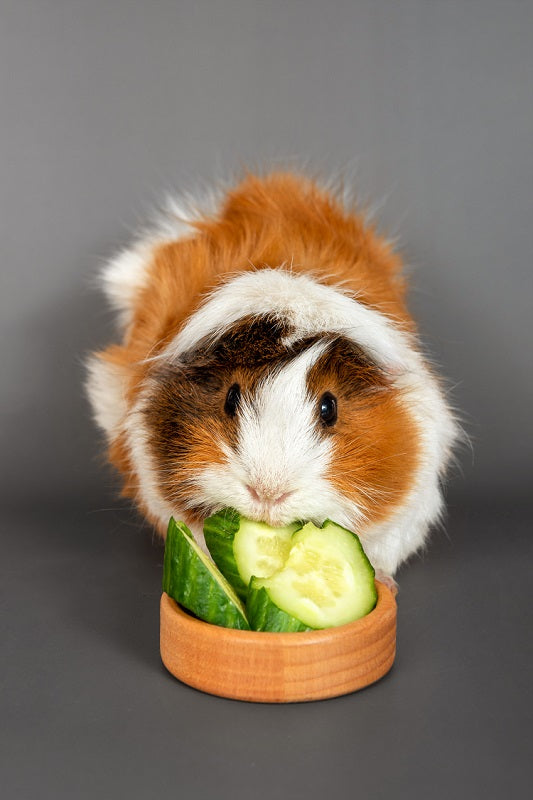
How to prepare cucumber the right way
Preparation is simple but matters a lot. Pesticides and wax can cling to the skin.
Follow these steps:
- Wash under running water and scrub the skin well
- Peel a strip or two if the cucumber is waxed
- Slice thin for safe chewing
- Remove large seeds only if your pig tends to gulp food
- Serve plain, with no salt, dressing, or dips
Can guinea pigs eat cucumber with skin? Yes, if it is washed well. The skin has fiber and a bit more nutrients than the flesh.
Practical tip from experience: thin half-moon slices are easy to hold and chew. They also help you control the portion.
Risks, allergies, and warning signs
Cucumber is mild, but a few risks exist.
Possible issues:
- Diarrhea from too much water
- Gas or bloat in sensitive pigs
- Pesticide residue on unwashed skin
- Bitter cucumbers with high cucurbitacins, which can upset the gut
Stop and call a vet if you see:
- Severe or ongoing diarrhea
- No appetite for 8 to 12 hours
- Lethargy, tooth grinding, or a swollen belly
Can guinea pigs eat cucumber without any risk? No food is risk-free. But with small, clean portions, risk stays low.
Best cucumber types and parts to feed
Good choices:
- English cucumbers with thin skin
- Persian or mini cucumbers with a sweet taste
- Garden cucumbers that are fresh and not bitter
What to avoid:
- Pickles or any cucumber in brine or vinegar
- Seasoned or salted cucumber
- Bitter cucumbers with a harsh taste or smell
Parts guide:
- Skin: safe when washed well
- Seeds: soft and usually fine to eat
- Ends: fine if fresh, trim if bitter
If you think can guinea pigs eat cucumber with seeds, the answer is yes for most pigs. If your pig gulps food, slice thin and keep seeds minimal.
Where cucumber fits in a balanced guinea pig diet
Cucumber has a clear role. It adds hydration and variety, not core nutrition.
Daily diet targets:
- Hay: 80% of the diet, unlimited timothy or other grass hay
- Vegetables: 10 to 15%, focus on vitamin C rich options
- Pellets: 1 to 2 tablespoons of fortified pellets per day
- Fresh water: always available
High vitamin C vegetables to pair with cucumber:
- Bell pepper, any color, daily
- Cilantro, regular rotation
- Romaine, green leaf, or red leaf lettuce
Can guinea pigs eat cucumber as a vitamin C source? Not really. It is too low to meet needs. Use it as a side, not a supplement.
Step-by-step plan to introduce cucumber
If this is the first time, go slow. Small pets do best with gradual changes.
Do this:
- Day 1: offer one thin slice and watch for 24 hours
- Day 3: offer two thin slices if stool stays normal
- Week 2: add cucumber to the weekly rotation, 2 to 4 times per week
- Keep new foods separate so you can track reactions
If you ask can guinea pigs eat cucumber during hot weather, yes. It can help with hydration, but water and shade matter more. Do not rely on cucumber alone to prevent heat stress.
Tip from the rescue world: track new foods in a simple notebook. Note the day, the portion, and how your pig felt.
Frequently Asked Questions of can guinea pigs eat cucumber
Can guinea pigs eat cucumber every day?
They can, but it is not ideal. Offer it a few times per week to avoid soft stool and to keep room for higher vitamin C veggies.
Can baby guinea pigs eat cucumber?
Yes, in tiny amounts after four weeks old. Focus on hay, pellets, and vitamin C greens first, then add a thin slice.
Is cucumber skin safe for guinea pigs?
Yes, the skin is safe and has some fiber. Wash well to remove wax and pesticides.
Can guinea pigs eat cucumber seeds?
Most seeds in cucumbers are soft and safe. If your pig gulps food, slice thin and limit seeds.
What should I serve with cucumber for a balanced plate?
Pair with bell pepper and leafy greens. Add hay and a small portion of pellets to meet daily needs.
Conclusion
Cucumber can be a cool, crisp treat for your guinea pig. It is safe, low in calories, and easy to serve. Keep portions small, wash well, and do not rely on it for vitamin C. Pair it with bell pepper and leafy greens for a strong daily plan.
Try the step-by-step plan this week. Watch how your pig responds, adjust the portion, and build a steady veggie routine. Want more guides like this? Subscribe, share your questions, or leave a comment with your pig’s favorite veggie.