

Yes, guinea pigs can eat apple skin in small amounts after thorough washing.
If you want the full picture, stay with me. I’ll explain can guinea pigs eat apple skin in depth, from safety to serving sizes.
I’ve cared for many guinea pigs in rescue and home settings. With clear steps and science-backed tips, you’ll know exactly how to feed apple skin the right way.
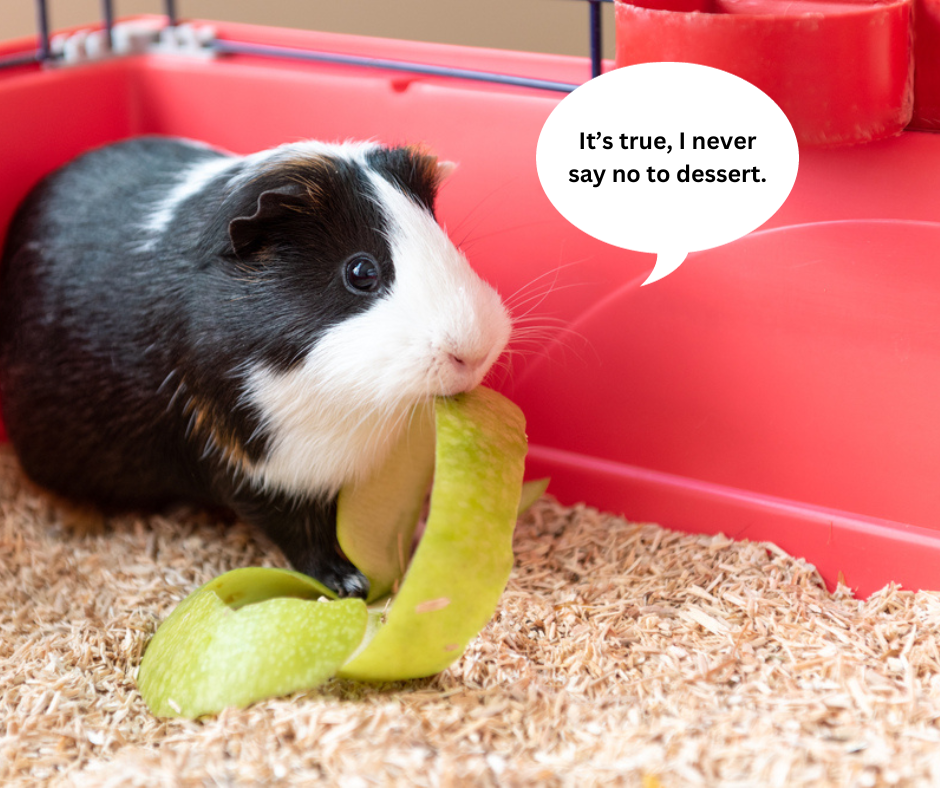
Can guinea pigs eat apple skin? Benefits and nutrients
Yes. Apple skin offers fiber and plant antioxidants that support gut health. The peel has more fiber and polyphenols than the flesh. That can help stool quality and support a healthy microbiome.
But apples are not a strong source of vitamin C. Guinea pigs need daily vitamin C from leafy greens and quality pellets. Apple skin is a treat, not a staple.
When people ask can guinea pigs eat apple skin, this is the key. It is fine in small, rare amounts. It should be part of a balanced plan, not a daily snack.
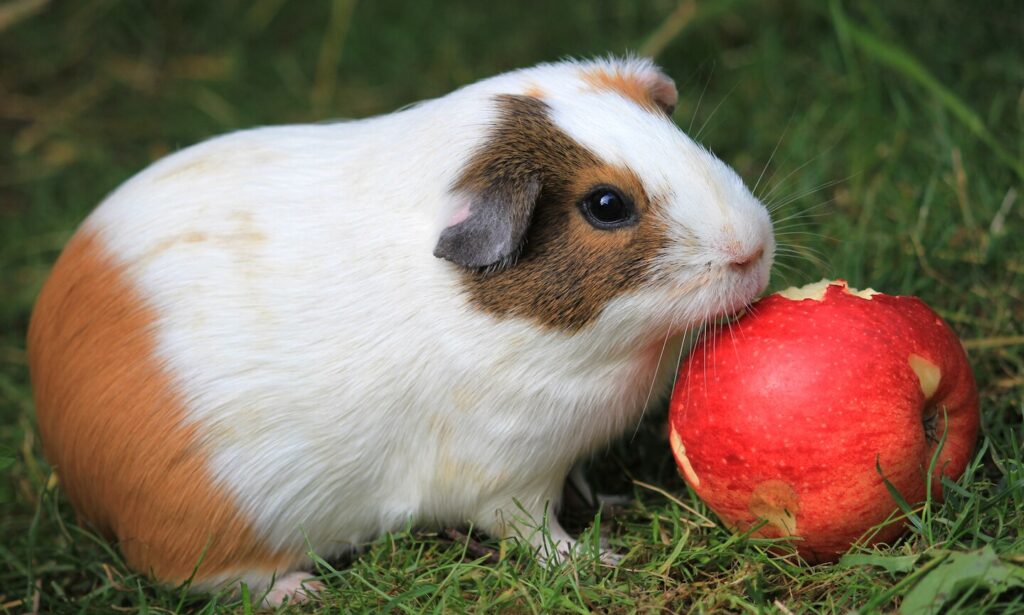
Can guinea pigs eat apple skin safely? Risks to consider
Sugar content is the main risk. Apples contain natural sugars that can upset the gut. Too much can lead to gas, soft stool, or weight gain.
Pesticide residue can sit on the peel. Always wash apples very well. If you cannot wash well, peel the apple and skip the skin that day.
Never feed the seeds, core, leaves, or stems. Apple seeds contain amygdalin, which can release cyanide. The core also poses a choking risk.
So, can guinea pigs eat apple skin every day? No. Keep it as an occasional treat to avoid sugar-related issues.
Serving apple skin the right way
Wash the apple under running water for 30 seconds. Use a clean produce brush. For extra care, soak in a baking soda solution for 10–15 minutes, then rinse.
Cut very thin slices or small matchsticks. Remove the core and seeds. Offer the skin with a little flesh still attached if you like.
Try one small piece first. Watch for any change in stool, gas, or appetite within 24 hours. If all is well, you can offer it again on another week.

Portions and frequency that work
Keep fruit treats very small. Aim for 1–2 thin slices of apple with skin. That equals about 1–2 teaspoons chopped.
Offer it once a week, or once every 10 days. Rotate with lower-sugar treats to protect the gut. This helps you avoid sugar overload over time.
For young or sensitive pigs, start even smaller. A pea-size piece is enough for the first try. Then build slowly if no signs of trouble appear.
When friends ask can guinea pigs eat apple skin more often, I say this. Small and rare is the safe path.
What I’ve learned from real-life care
In my rescue work, I test new foods in tiny steps. I offer a sliver of apple skin, no bigger than a fingernail. I note stool and behavior for a day.
Most pigs do fine with that amount. A few get soft stool if I give more. For those pigs, I switch to lower-sugar greens and skip fruit for a while.
This slow method has saved me many vet visits. It also builds trust with shy pigs. They learn that new foods come in gentle, safe steps.
Signs your guinea pig is not tolerating apple skin
Watch for these signs within 24–48 hours:
- Soft or watery stool
- Bloating, gas, or less interest in hay
- Low energy or less appetite
- Teeth grinding or hunching from discomfort
If you see any of these signs, stop fruit treats. Offer only hay and water for a day. If symptoms persist, contact a small-animal vet.
This is why we ask can guinea pigs eat apple skin with care. It is safe when your pig’s gut can handle it. It is not a fix for vitamins or a daily snack.

How to fit apple skin into a balanced diet?
Build the plate around hay. Hay should be available at all times. It supports teeth and gut health.
Add fresh greens every day. Think romaine, cilantro, and bell pepper. Bell pepper is a strong vitamin C source.
Use fruit as a rare extra. Apple skin can be one of several options. You can rotate with berries or a slice of cucumber peel for crunch but lower sugar.
This plan answers can guinea pigs eat apple skin in context. Yes, but only as a small part of a hay-based diet.
Practical tips and common mistakes
Do this:
- Wash apples very well or peel if unsure
- Serve thin slices and remove the core and seeds
- Start small and track stool for a day
- Offer once a week at most
Avoid this:
- Large chunks that can choke or upset the gut
- Daily fruit treats or mixed fruit bowls
- Dried apples or apple chips, which are very sugary
- Assuming apples supply enough vitamin C
If you still wonder can guinea pigs eat apple skin safely, follow these steps. They keep sugar low and safety high.
Frequently Asked Questions of can guinea pigs eat apple skin
Can guinea pigs eat apple skin every day?
No. The sugar content is too high for daily use. Keep apple skin as a weekly treat at most.
Is apple skin better than peeled apple for guinea pigs?
The skin has more fiber and antioxidants. But both are sugary, so the portion must stay small.
Do I have to buy organic apples for my guinea pig?
You do not have to. Organic or not, wash well, scrub, or soak in baking soda water, then rinse.
Can baby guinea pigs eat apple skin?
Yes, but only in tiny amounts after they are eating hay and greens well. Start with a pea-size piece and watch for any changes.
Are apple seeds and cores safe for guinea pigs?
No. Remove seeds and cores due to choking and toxin risks. Feed only thin slices of the flesh and clean skin.
How much apple skin can I give at once?
Offer 1–2 thin slices, about 1–2 teaspoons chopped. That is enough for taste without overloading sugar.
What should I do if my guinea pig gets diarrhea after apple skin?
Stop all fruit and offer only hay and water. If diarrhea lasts beyond a day or your pig seems unwell, call a vet.
Conclusion
Apple skin can be a safe, tasty treat for guinea pigs when served right. Keep portions small, wash well, avoid seeds and cores, and watch for any gut changes. Your goal is a hay-first diet, with greens for vitamin C, and fruit as a rare extra.
Try a thin slice next week and note how your pig responds. If all goes well, rotate it with other low-sugar options. Want more care guides and feeding tips? Subscribe and share your questions in the comments.