

Yes, guinea pigs can eat blackberries, but only in small, occasional portions.
If you’ve wondered can guinea pigs eat blackberries, you’re in the right place. I’ve raised and coached many owners on small-pet nutrition, and I’ll guide you through when blackberries help, when they hurt, and exactly how to serve them.
Keep reading for expert tips, practical steps, and vet-backed facts that make feeding time safe and simple.
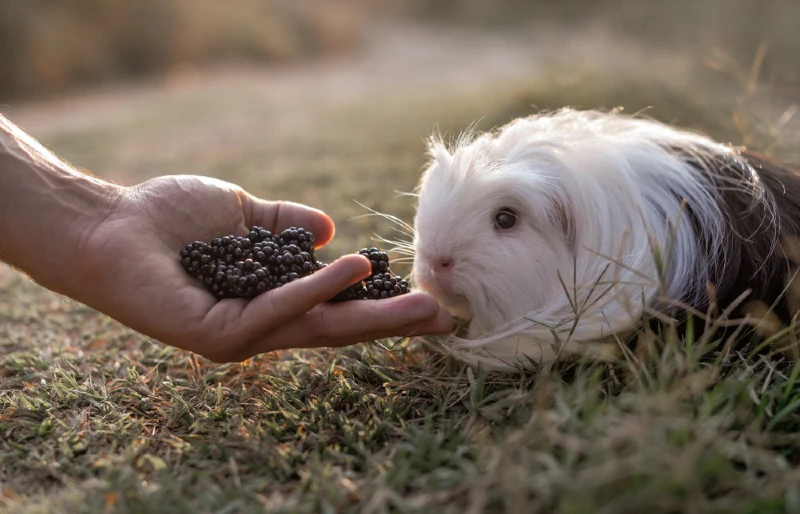
What Are Blackberries Made Of? Nutrition for Guinea Pigs
Blackberries are rich in water, fiber, and vitamin C. That last point matters a lot because guinea pigs cannot make vitamin C on their own.
Nutrition databases show about 21 mg of vitamin C per 100 g of blackberries, alongside fiber and antioxidants like anthocyanins.
They are lower in sugar than many fruits, but sugar is still present. Blackberries also contain small amounts of calcium and phosphorus.
For a guinea pig, the mix can be helpful if you use tight portions. This is why the answer to can guinea pigs eat blackberries is yes, but with limits.
Key nutrients in blackberries:
- Vitamin C that supports immune health and tissue repair
- Fiber that supports gut function
- Antioxidants that help reduce oxidative stress
- High water content that adds light hydration

Benefits: Why Offer Blackberries?
When used as a treat, blackberries can add variety and enrichment. The scent and texture spark foraging behavior, which keeps pets engaged. They also add vitamin C, which supports joints, skin, and immunity.
Many veterinary nutrition guides note that modest fruit treats can improve diet acceptance without replacing core foods.
Practical gains when you explore can guinea pigs eat blackberries:
- Extra vitamin C to back up pellets and bell peppers
- Gentle hydration on warm days
- Enrichment through new tastes and colors
- Antioxidants that may support overall wellness

Risks and How to Avoid Them
Sugar is the main concern. Too much fruit can upset the gut and cause soft stools. It can also add empty calories and lead to weight gain over time. Seeds in blackberries are tiny and usually safe, but the fruit can be messy and sticky.
Other things to watch:
- Calcium balance and oxalates in the overall diet may affect bladder health
- Pesticide residues on berries can irritate sensitive pets
- Rapid diet changes can disturb normal gut bacteria
How to lower risk if you ask can guinea pigs eat blackberries:
- Feed small amounts, not daily
- Wash thoroughly
- Introduce slowly and watch stools for changes
- Keep hay as the main food, with measured pellets and leafy greens

Safe Serving Size and Frequency
For a healthy adult, aim for 1 small blackberry or half a medium berry, one to two times per week. That is about 5 to 10 grams. Do not serve on back-to-back days. Space fruit days apart.
For young guinea pigs, introduce fruits after their gut is stable on hay, pellets, and a few safe greens. Offer a tiny piece first and wait 24 to 48 hours. If stools stay normal, you can repeat later.
Use this simple rule whenever you wonder can guinea pigs eat blackberries:
- Less is more
- Watch the poop
- Keep variety high and sugar low

How to Prepare Blackberries for Guinea Pigs
Preparation is simple, but details matter. Clean handling reduces pesticide residue and extra microbes.
Follow these steps:
- Choose ripe, firm berries without mold or bruises
- Rinse under cool water and pat dry
- Cut large berries into halves or quarters
- Serve in a clean dish to avoid soiling hay
- Remove leftovers after one hour
- Track stool quality and appetite after new foods

What I’ve Learned From Feeding Blackberries
I’ve seen many guinea pigs go wild for a tiny blackberry piece. It can turn a shy pig curious and eager. I learned to keep a wet cloth ready because mouths and paws stain fast.
I also learned that even friendly fruits are better as rare treats. When clients ask can guinea pigs eat blackberries, I say yes, but rotate with greens and low-sugar veggies. That keeps the diet balanced and the gut calm.
Tips from experience:
- Offer a taste after a hay meal to slow sugar spikes
- Pair with vitamin C vegetables so you rely less on fruit
- Keep a feeding log of new foods and stool notes
- If you spot softer poop, pause fruit for a week
Smart Pairings and Alternatives
Blackberries fit best in a plan that controls calcium and sugar. Mix fruit days with low-calcium, vitamin-rich greens. This reduces the chance of bladder issues and helps with weight control.
Try these pairings:
- Romaine or green leaf lettuce with a blackberry sliver
- Cilantro or parsley in tiny amounts for aroma
- Red or yellow bell pepper for steady vitamin C
- Cucumber slices for crunch and water
Good alternatives when you ask can guinea pigs eat blackberries or something else:
- Blueberries, one or two, on rare occasions
- A thin strawberry slice
- Apple slice without seeds, very rarely
- Tomato cherry quarter, not daily
Can Guinea Pigs Eat Blackberries Compared With Other Berries?
If you compare berries, blackberries are often moderate in sugar and rich in fiber. Blueberries tend to be sweeter.
Strawberries can be more acidic but are also high in vitamin C. Raspberries are fiber-rich and a close match to blackberries in how you should serve them.
So, can guinea pigs eat blackberries over other berries? They can, and they often tolerate them well. The key across all berries is the same: tiny portions and not too often.
Signs Your Guinea Pig Isn’t Tolerating Blackberries
Track your pet after any new treat. Small changes can warn you early. If you see a problem, stop fruit and go back to hay, water, and simple greens.
Watch for:
- Soft stools, diarrhea, or fewer poops
- Gas, a bloated look, or less interest in hay
- Lethargy or hiding more than usual
- Wet chin or drooling from mouth irritation
- Weight gain over weeks
Call a small-animal vet if symptoms are strong or last more than a day. Bring notes on what you fed and how much. This helps the vet guide you fast.
Frequently Asked Questions of can guinea pigs eat blackberries
How often can guinea pigs eat blackberries?
Once or twice per week is enough. Keep days apart and avoid back-to-back servings.
How many blackberries can guinea pigs eat at once?
One small berry or half a medium berry is a safe start. Adjust down for tiny pigs and up only if stools stay normal.
Are blackberry leaves safe for guinea pigs?
Young, pesticide-free leaves can be offered in small amounts as forage. Rinse well and watch for any digestive changes.
Can baby guinea pigs eat blackberries?
Wait until the gut is stable on hay, pellets, and a few greens. Then offer a tiny piece and monitor for 24 to 48 hours.
Can guinea pigs eat frozen blackberries?
Yes, if fully thawed and at room temperature. They are mushy and messy, so feed even smaller portions.
Do blackberries cause bladder stones in guinea pigs?
Blackberries are not high in calcium compared to many greens, but total diet balance matters. Keep portions small and vary greens to support bladder health.
Can guinea pigs eat blackberry seeds?
Yes, the seeds are tiny and usually safe. Cut large berries to reduce mess and improve portion control.
Conclusion
Guinea pigs can eat blackberries, but tiny portions and smart timing are key. Use them as a rare treat to add vitamin C, fiber, and enrichment without crowding out hay and greens. Watch stools, rotate foods, and keep sugar low to protect the gut and bladder.
Try the steps here this week: offer a single, washed blackberry piece after a hay meal and note how your pig reacts. Want more safe treat ideas and feeding plans? Subscribe, share your experience in the comments, and explore our other small-pet nutrition guides.