

Yes, guinea pigs can eat bell peppers daily in small, fresh, seed-free portions.
As a long-time guinea pig owner and pet nutrition writer, I get this question a lot: can guinea pigs eat bell peppers? The short answer is yes, but the best care comes from the details.
Here, I break down the science, share what works in real life, and show you how to feed bell peppers in a safe, smart, and tasty way your pigs will love.
Nutritional snapshot: why bell peppers belong in a guinea pig bowl
Bell peppers are rich in vitamin C, which guinea pigs cannot make on their own. A small serving can meet a big part of their daily needs. They also add water, fiber, and colorful antioxidants.
Key nutrients per 100 grams of raw bell pepper, based on standard food data:
- Vitamin C: about 80 to 180 mg, depending on color and ripeness
- Water: about 92 percent, which supports hydration
- Fiber: gentle on the gut when fed in modest amounts
- Calories and sugar: low to moderate, suitable for routine feeding
Veterinary nutrition references suggest adult guinea pigs need about 10 to 30 mg of vitamin C per day, with higher needs for pregnancy, illness, or growth. This is one reason people ask can guinea pigs eat bell peppers so often. They are one of the easiest fresh sources to offer every day.

Health benefits your guinea pig will notice
Bell peppers support daily health in simple ways. They protect cells, aid immunity, and help prevent scurvy.
Top benefits:
- Vitamin C power: helps collagen, wound healing, and immune defense
- Hydration help: high water keeps digestion smooth and stools regular
- Antioxidant support: pigments like carotenoids help reduce oxidative stress
- Low calcium: helpful for pigs prone to bladder stones when the diet is balanced
When owners ask can guinea pigs eat bell peppers, I remind them that variety still matters. Peppers are a star, not the whole show.

Source: guineadad.com
Safe serving size and how often to feed
Bell peppers can be offered daily. Small, steady servings work best for the gut.
Use these simple rules:
- Serving size: 1 to 2 thin slices per pig, or about 1 to 2 tablespoons
- Frequency: daily is fine if stools stay firm
- Balance: pair with leafy greens and a few other veggies for variety
From my routine, can guinea pigs eat bell peppers every day? Yes. I feed a slice or two each morning. My pigs stay bright, active, and their coats shine.

Color guide: green, red, yellow, or orange?
All sweet bell peppers are safe. Each color has a small twist on taste and nutrients.
What to know:
- Green: least sweet, often cheapest, moderate vitamin C, great for daily use
- Red: sweeter and riper, often higher vitamin C, use if your pig needs a boost
- Yellow and orange: sweet and crisp, often very high in vitamin C, rotate in
People often search can guinea pigs eat bell peppers of all colors. The answer is yes. Mix colors through the week to keep meals fun and balanced.

How to prepare bell peppers for guinea pigs
Good prep keeps meals safe and easy to eat. Keep it raw, plain, and clean.
Steps I follow:
- Wash well under cool water to remove dirt and residues
* Remove stem, seeds, and white pith to lower choke risk - Slice into thin strips for easy chewing
- Serve at room temperature for best aroma and crunch
- Never add oil, salt, dressings, or spices
Many ask can guinea pigs eat bell peppers with seeds. Seeds are not toxic but can be a choke risk, so I always remove them.

Risks, cautions, and what to avoid
Bell peppers are gentle on most pigs. Still, watch for signs of tummy upset.
Keep these cautions in mind:
- Overfeeding can cause gas or soft stools
- Switch colors slowly if your pig is sensitive to sweet foods
- Avoid hot peppers and spicy varieties, which can burn the mouth and gut
- Do not feed pepper leaves or stems from garden nightshades
- Wash away all pesticide residues
If you wonder can guinea pigs eat bell peppers while on a special diet, talk with an exotics vet. This matters if your pig has bladder stones or chronic gut issues.
Step-by-step: introduce peppers the right way
A slow start helps the gut adjust and reduces stress.
Try this simple plan:
- Day 1 to 3: offer a pea-sized strip once a day and watch stools
- Day 4 to 7: raise to one thin slice if stools stay normal
- Week 2: settle at 1 to 2 slices daily as part of the veggie mix
If your pig is new, can guinea pigs eat bell peppers right away? Yes, in tiny amounts. Patience pays off.
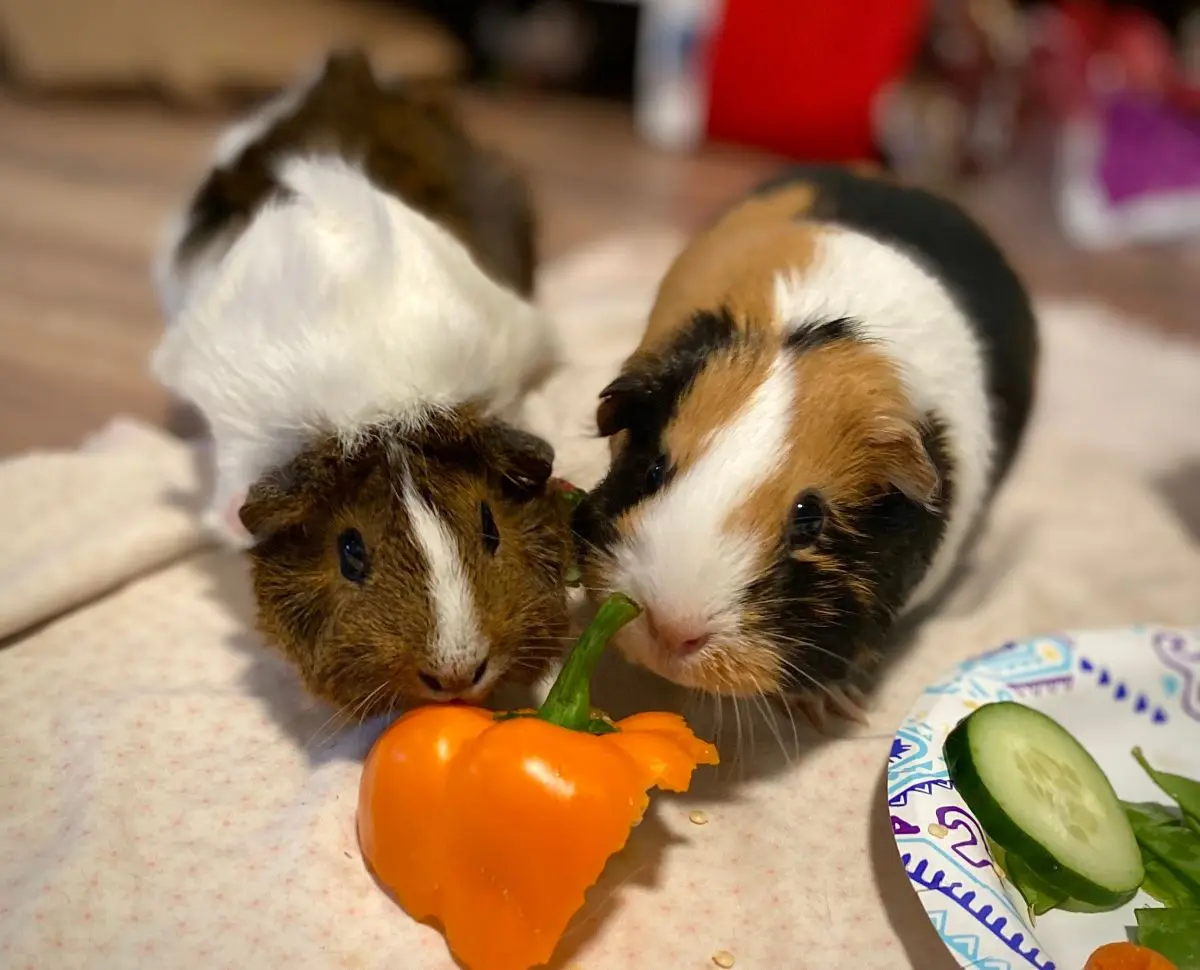
Signs of trouble and when to call the vet
Most pigs handle peppers well. Still, know the red flags.
Watch for:
- Watery stools, fewer droppings, or very soft poop
- Bloating, less appetite, or hunching
- Lethargy or sudden weight drop
If any sign lasts more than 24 hours, stop peppers and call an exotics vet. When asked can guinea pigs eat bell peppers after a tummy upset, I suggest a pause, then a slow re-try.
Sample weekly veggie plan with bell peppers
A simple plan keeps things easy and safe. Adjust to your pig’s size and health.
Daily base:
- Unlimited grass hay and fresh water
- Pellets made for guinea pigs, fortified with vitamin C
Veggie rotation:
- Monday to Sunday: 1 to 2 slices of bell pepper each day
- Add two or three of these per day in small amounts: romaine, green leaf lettuce, cilantro, cucumber, zucchini, cherry tomato, carrot top, endive, escarole
- Rotate parsley, kale, or spinach only in tiny amounts due to higher calcium
This plan answers more than can guinea pigs eat bell peppers. It shows how peppers fit into a full, steady diet.
Personal tips from years of guinea pig care
Small tweaks make a big difference. Here are lessons I learned the hard way.
What works:
- Green first: it is mild and easy to accept
- Red as a booster: handy when a pig is under the weather and needs more vitamin C
- Thin strips: reduce mess and waste, and help shy pigs nibble
- Store smart: keep cut pieces in a sealed box for up to two days, then refresh
If you still wonder can guinea pigs eat bell peppers every day, my experience says yes, with steady portions and careful watch of the poop and weight.
Frequently Asked Questions of can guinea pigs eat bell peppers
Can guinea pigs eat bell peppers every day?
Yes, daily feeding is fine in small servings. Watch stool quality and adjust the amount if you see soft poop.
Are red or green bell peppers better for guinea pigs?
Both are safe. Red often has more vitamin C and sugar, while green is milder and great for daily use.
Can guinea pigs eat bell peppers with seeds?
Remove seeds to avoid a choke risk. The seeds are not toxic, but the smooth shape can be tricky to chew.
How much bell pepper should I feed at one time?
Offer 1 to 2 thin slices per pig. That equals about 1 to 2 tablespoons.
Can baby guinea pigs eat bell peppers?
Yes, start with tiny pieces after they begin eating solids. Increase slowly and pair with hay and balanced pellets.
Do bell peppers replace vitamin C supplements?
They can cover most needs if fed daily with other vitamin C foods. For sick, pregnant, or stressed pigs, ask a vet about extra support.
Conclusion
Bell peppers are a safe, smart, and tasty staple for guinea pigs. They deliver vitamin C, hydration, and crunch with very little risk when served in small, steady amounts. Keep it simple: wash well, slice thin, feed daily, and watch the poop.
Ready to put this guide to work? Try a green pepper slice today, track your pig’s response, and build a colorful weekly mix. If you found this helpful, share it with a fellow owner, subscribe for more pet care guides, or drop your question in the comments.